This one is for the teachers

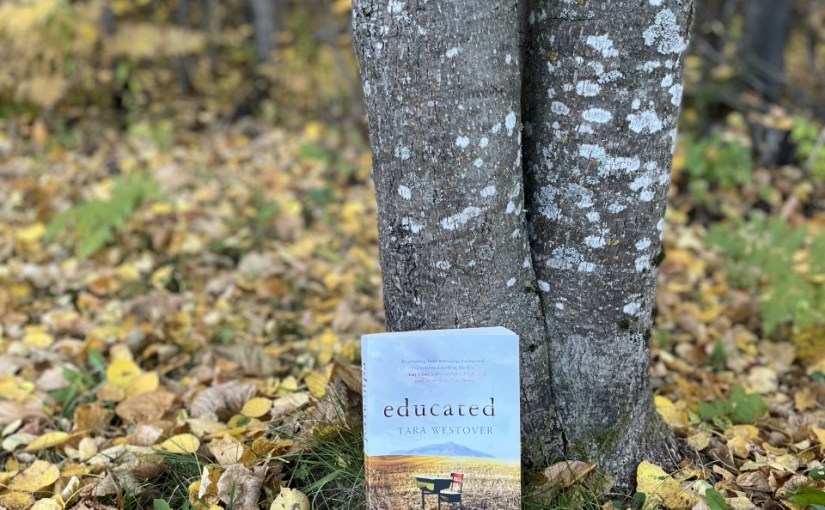
educated by Tara Westover

            I read educated by Tara Westover on the recommendation of friends and family, and not only am I thankful for their recommendations but I would argue that if there is one story educators should take the time to read outside of their classrooms this year, this is it. Westover’s novel is a memoir related to her journey in learning, but the descriptions she offers and the memories she examines are so terrifyingly vivid that it can become difficult to comprehend her experiences as a reality. As someone so incredibly fortunate to be raised surrounded by so much love and laughter, many of Westover’s memories were not only horrifying to me, but also felt strange, as though there was an impossibility related to the choices her family made. More than the horror associated with her family’s actions, I felt a deep admiration for the strength and courage that Westover describes as she chooses to prioritize her learning, and herself. When we see others experience, or hear of others experiencing, less than desirable situations it can sometimes be easy to suggest that they ought to make different choices to better remedy their situation. educated by Tara Westover provides honest insight into the challenges individuals face when they desire to change their circumstances, and the power associated with the opportunity to learn. As a teacher it reinforced aspects of my educational philosophy that focus on the impact of personal experiences and perceptions on learning, the power of education and access to information, and the role of learning in students’ lives as it takes place beyond the walls of a classroom. Readers should be aware that this novel describes experiences which may be sensitive, especially family violence and unsafe labour.
Let’s Talk Equity

POWER SHIFT by Sally Armstrong

            Originally a CBC Massey Lecture, Sally Armstrong’s POWER SHIFT investigates gender-based inequities, both historically and contemporarily. Explored in the text are issues of wage inequity, gender-based violence, discrepancies in opportunities for non male individuals, and the narratives that help to perpetuate sentiments that non males are less deserving or worthy. Armstrong also recounts first hand observations of women’s experiences with inequity on a global scale that relate specifically to war and reproductive rights, and it should be noted that some of these accounts may be particularly sensitive to readers that have lived through similar events. As a woman, the contents of this text prompted feelings of fury, frustration, deep sadness, and reinforced my understanding that education is capable of making incredible impacts. As a teacher, I know that it can be difficult to discuss topics such as gender inequities with students, but also that offering students a safe structured environment in which to better understand sensitive issues is crucial for their learning. Offering students well-researched, insightful, and accurate sources to improve their understandings of sensitive topics is an important first step, and Armstrong’s POWER SHIFT makes for a great source to introduce students to research concerning social inequities. More than a useful text for students, I believe that this text offers an opportunity for all to better understand the roots of social inequities and how they may be overcome. If you are a non male who has ever been told that a task was intended for men, that you are less capable or worthy because of your gender, that your knowledge or abilities were limited because of your gender, that your potential was limited because of your gender, then this book will validate your experiences as a non male. If you have ever had your credentials undermined, your wardrobe policed, or your reproductive rights attacked because of your gender then you understand the vital importance in education related to gender-based inequities. Take this opportunity to educate yourself, so that you may better educate your students, families, friends, and acquaintances. With the current resurgence of political actions on a global scale that target women’s rights, specifically their reproductive rights, the conversation related to gender inequity continues to remain vital.

Because of Dr. Smith

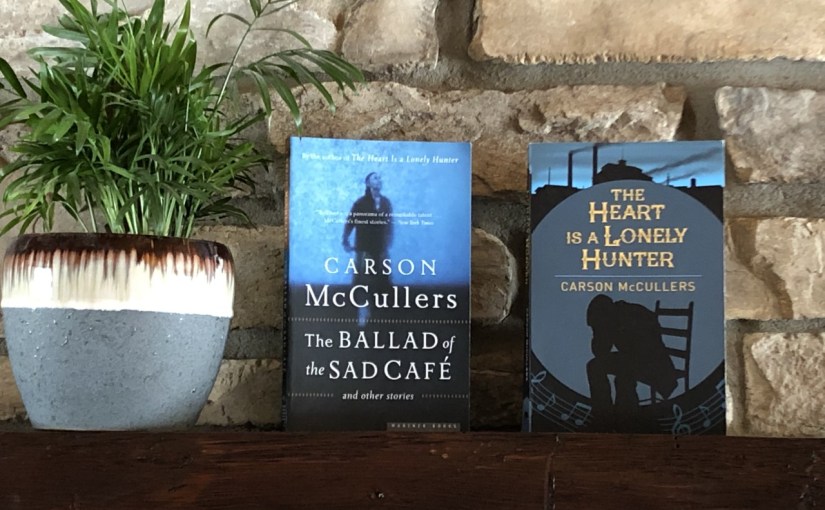
THE HEART IS A LONELY HUNTER by Carson McCullers

            Taking the time to read Carson McCullers’ THE HEART IS A LONELY HUNTER was an important reminder for me of how our relationships as educators are capable of offering long lasting impacts on students’ reading. I initially picked up this novel after seeing it in a bookstore and being reminded of my first year as an undergrad student when my English professor, Dr. Smith, included McCullers’ The BALLAD of the SAD CAFÉ (another worthwhile read) in our course syllabus. I had really enjoyed reading The BALLAD of the SAD CAFÉ but had not yet taken the time to read more of McCullers’ work. Going forward, I realized how much my own professors and teachers had influenced both my reading interests, and the variety of literature that I have been exposed to. I encourage you to take a moment to reflect on the educators that have positively impacted your reading choices thus far, and how you are capable of positively impacting student reading by familiarizing yourself with a greater variety of genres, and incorporating them into your course plans as well as your classroom library. This latest read evoked joy, sadness, and intrigue in a way that only southern gothic literature is capable of. McCullers is dedicated to exposing the depth of pain and compassion present in her characters’ lives as she establishes a plot centered around the lonely Mr. Singer. Members of the early twentieth century community in Georgia are drawn to Mr. Singer as they seek his silent wisdom in response to their queries and woes. Unknowingly, Mr. Singer brings together members of his community with his kindness. As with all southern gothic there is an aspect of the absurd, and a truth that functions to describe the uncomfortable aspects of society we aren’t always willing to address. Novels that address the reality of our world often include sensitive topics, and THE HEART IS A LONELY HUNTER is no exception. Readers should be aware that the novel details childhood violence, discrimination on the basis of race, the struggle of poverty, death of a loved one, and death by suicide. As an educator I would not introduce this novel into my class in its entirety, but would instead suggest the inclusion of short passages that illustrate characteristics of southern gothic as students are made aware of a growing list of genres and what defines them.